
|
tokens from Fraţii Kemény (Kemény Brothers) cannery in Salonta |
|
 |
 |
|
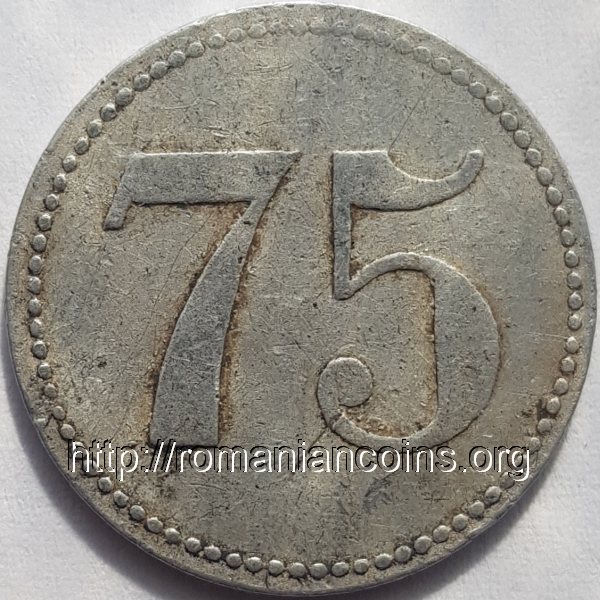
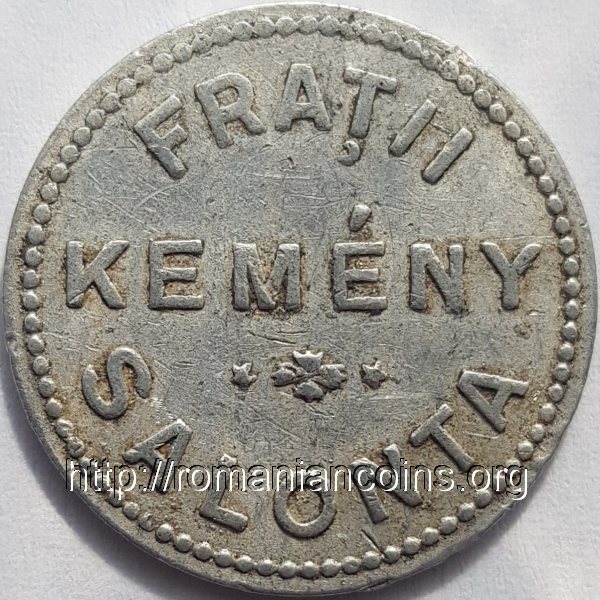
25 mm, aluminum outer pearl circle, face value 75 | outer pearl circle, adornment, inscription FRAŢII KEMÉNY SALONTA meaning KEMÉNY BROTHERS |
 |
 |
|
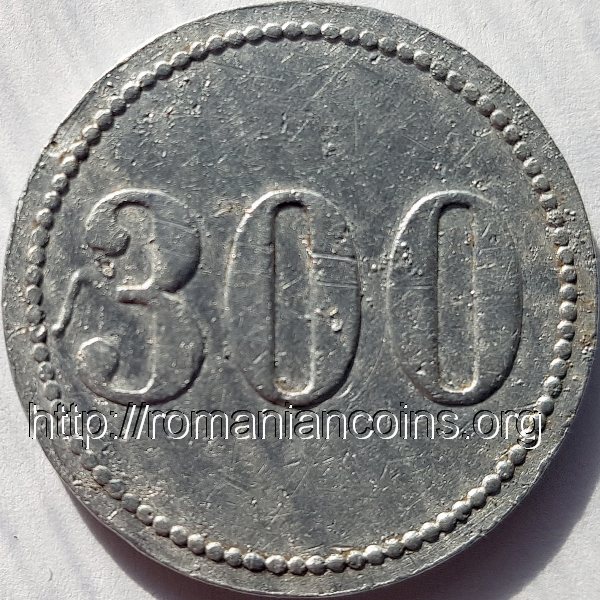
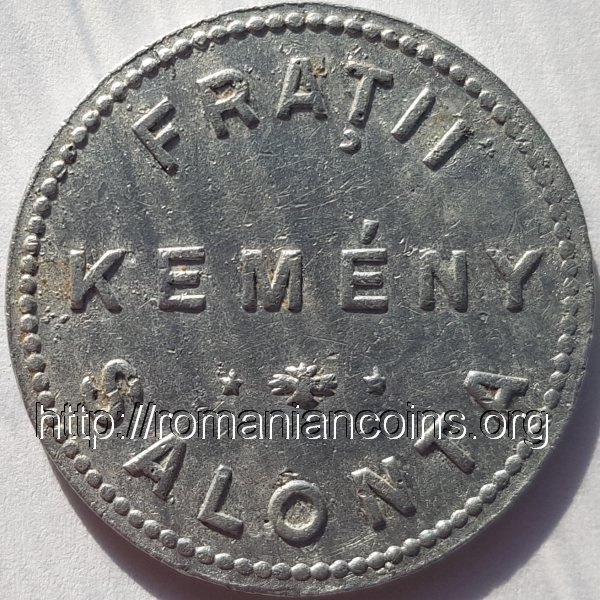
28 mm, aluminum outer pearl circle, face value 300 | outer pearl circle, adornment, inscription FRAŢII KEMÉNY SALONTA meaning KEMÉNY BROTHERS |
The Kemény brothers' company was founded in 1895 [1] by Károly Kemény (1867–1913), and dealt with meat processing and canning. The other brothers were József, Vida (1871–1943) and Sándor. Their successors were also involved in the administration of the business. From the beginning, the company excelled in canned poultry meat - geese and ducks, and from 1905 they started exporting. The company also opened a branch in Dresden, Germany.
During the interwar period the company continued to operate. It is then that the tokens presented on this page were manufactured and used. The Kemény brothers are certified in 1923 as salami manufacturers in the town of Salonta-Mare [2].
Immediately after the Second World War, the Kemény Brothers canning factory in Salonta, Bihor county, being located at the same address however newly named Stalin Street no. 85, came under the administration of Casa de Administrare şi Supraveghere a Bunurilor Inamice (C.A.S.B.I.)- House of Administration and Supervision of Enemy Assets [3]. After August 23, 1944, Romania signed an Armistice Convention with the Allies, the compliance to with which was imposed by an Allied Control Commission. According to the Convention, the assets of the countries that became Romania's enemies after August 23 (i.e. Germany and Hungary) and of their citizens were treated in a special way, and their alienation was forbidden [4].
Here is the place to clarify how the canning factory in Salonta entered the list of goods belonging to Romania's enemy countries. Through the Second Vienna Award (Vienna Diktat) of 1940, Romania had to bow to force and as a result a region referred to under the more conventional than geographical name of "Northern Transylvania" came under Hungarian control on September 15, 1940 and remained under Hungarian control until October 1944. The town of Salonta was among the lost localities. In 1943, based on the adopted anti-Semitic laws, the Hungarian state had nationalized the Kemény family company [5]. The business had been taken over by Hangya Szövetkezet (Ant Cooperative). This is why the Kemény Brothers firm had to consequently be taken over by Casa de Administrare şi Supraveghere a Bunurilor Inamice.
On June 11, 1948, the company was nationalized again, this time by the communized Romanian state.
What was the use of these tokens with such unusual nominal values (50, 75, 100, 150, 300, 450) and no mention of currency? According to [1], the tokens were received by the best employees at the meat processing plant. The workers would have been annually evaluated, only the most diligent after having collected enough tokens being rehired for the following year. A token inscribed in German - BRUDER KEMENY - with a face value of 1 1/2 [6] is also known, probably used before the First World War.
References
1. Czégé Réka, Társadalmi mobilitás a síron túl (Social mobility beyond the grave). A BIHARI MÚZEUM ÉVKÖNYVE. BERETTYÓÚJFALU, 2023, p. 83...114.
2. Melbert N. (direcţiunea), Anuarul „SOCEC” al României-Mari. vol. II-Provincia, 1924-24. Editura „SOCEC & Co.”, Bucureşti.
3. * * *, Arhivele Naţionale.ro, http://arhivelenationale.ro/site/download/inventare/Casa-de-Administrare-si-Supraveghere-a-Bunurilor-Inamice.-Dosare-persoane-juridice.-Lit.-F-O.-Inv.-3440.pdf, accesat februarie 2024.
4. Banu F., Activitatea Casei de Administrare şi Supraveghere a Bunurilor Inamice (1945-1947). Xenopoliana. Buletinul Fundaţiei Academice „A. D. Xenopol, VII, Iaşi, 1999, 1-2, p. 45 - 66.
5. Makai Z., Szemelvények Nagyszalonta ipartörténetéből (Sequences from the industrial history of Salonta), Editura Varadinum Script, Oradea, 2019.
6. Schäffer E., România. Jetoane, semne valorice şi mărci, Guttenbrun [old German name of Zăbrani village in Arad county], 2012.
|
Back to sitemap page!
|