
|
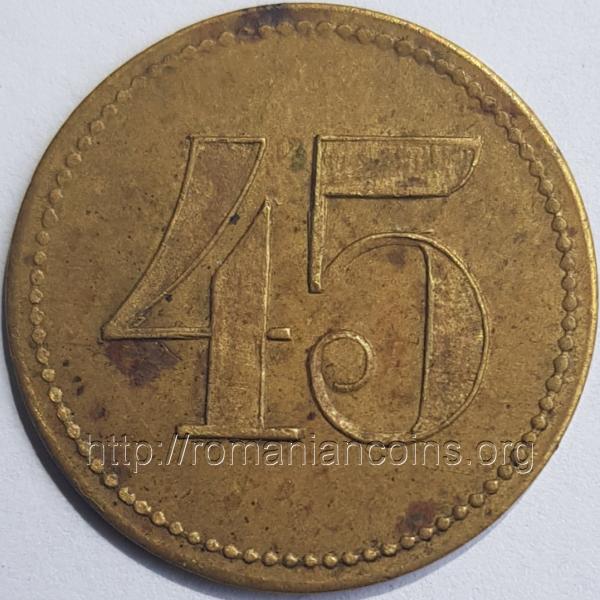
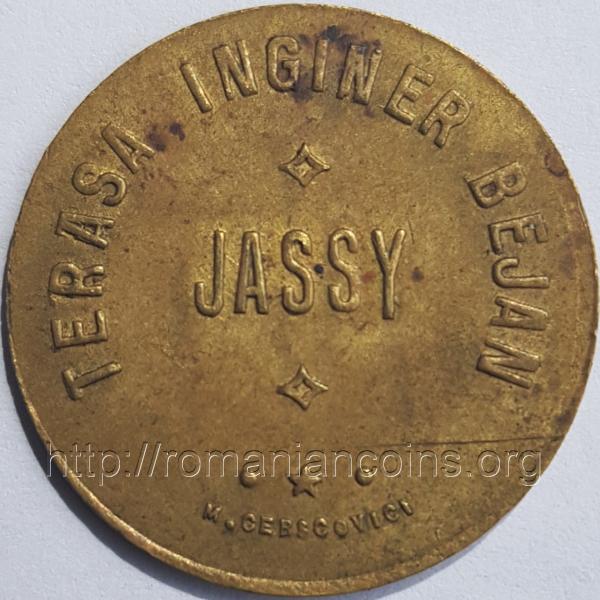
Engineer Bejan Terrace JASSY (Iaşi) token |
|
|
|
|
21.5 mm, brass Obverse: outer pearl circle, value 45 | Reverse: TERASA INGINER BEJAN ✧ JASSY ✧ meaning ENGINEER BEJAN TERRACE JASSY, in exergue • ★ • M. GERSCOVICI (name of the engraver) |
About Grigore Bejan
Grigore Bejan (25th of November 1866, Vaslui - 1948?) was a graduate of "Şcoala de Fii de Militari" (Sons of Military Personnel School, probably the one in Iaşi) and of the Polytechnic School in Brussels (École polytechnique de Bruxelles, class of 1894). From 1902 he worked as substitute teacher at Şcoala Superioară de Arte şi Meserii in Iaşi (High School of Arts and Crafts) and as permanent teacher from 1905 [1].
Iaşi City Map. Brick Factory
Engineer Bejan created the city plan of Iaşi in 1896-97. The weekly "Ecoul Moldovei" (Echo of Moldavia) of February 22, 1896 [2] indicated that Bejan had hired five engineers for this operation, that the necessary instruments had been ordered from Paris and Vienna, that the central observation point was the Golia Monastery tower, and that 11 other "bearing pyramids" would be used. "Ecoul Moldovei" of March 24, 1898 [3] announced that the city plan had been verified by a commission and that it had been definitively received by the Communal Council, which had commissioned the work. The Council also had voted a letter of gratitude to eng. Bejan.
In 1899, Bejan opened a brick factory in Iaşi. "Ecoul Moldovei" of April 1, 1899 [4] published an advertisement for "Fabrica de cărămidă Grigore Bejan" (Grigore Bejan Brick Factory), which produce bricks "according to the usual method" (the machines had not yet been installed). The address where Bejan lived in 1899 is also given: Arcu Street, no. 1. In 1900, "Ecoul Moldovei" [5] published an advertisement for "Fabrica de cărămidă şi teracota inginer Gr. Bejan Iaşi" (Engineer Gr. Bejan Iaşi Brick and Terracotta Factory). The factory produced pressed bricks, pavers, tiles, roof tiles, terracotta stoves, terracotta pipes, etc.
Bejan Hotel and Terrace
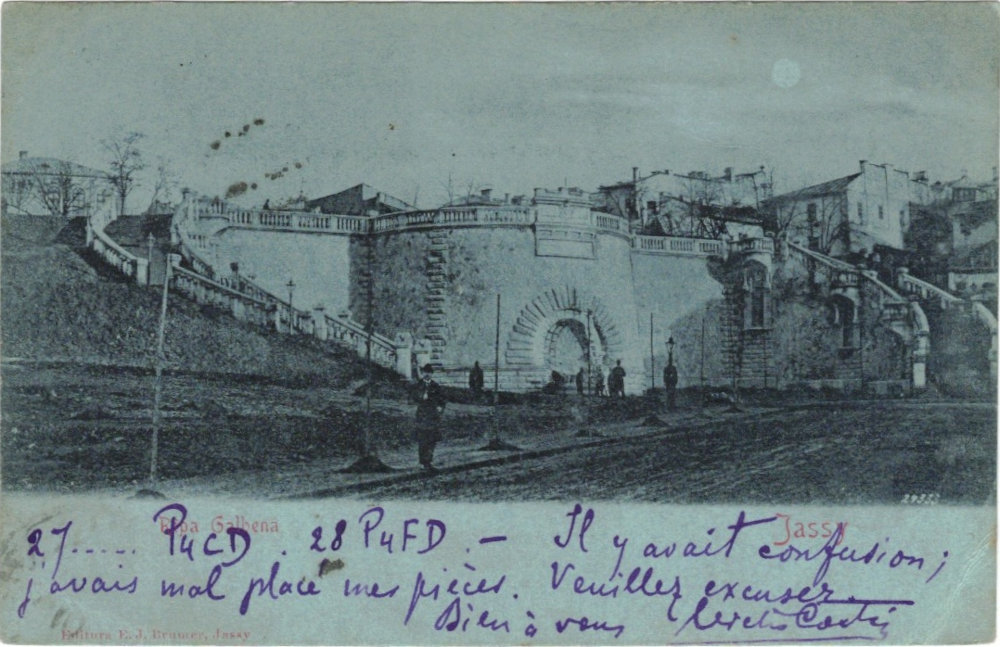
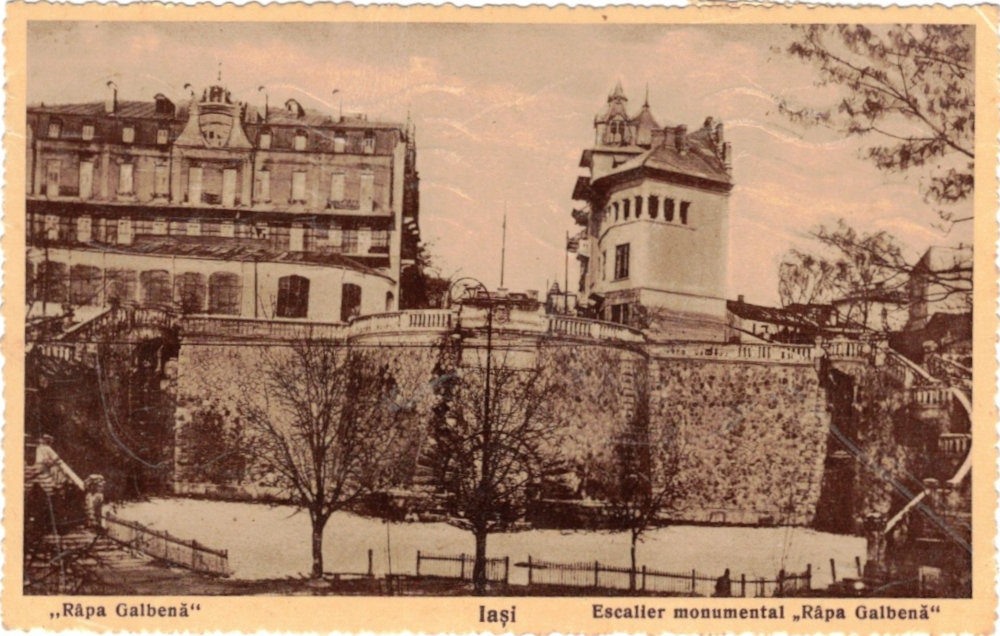
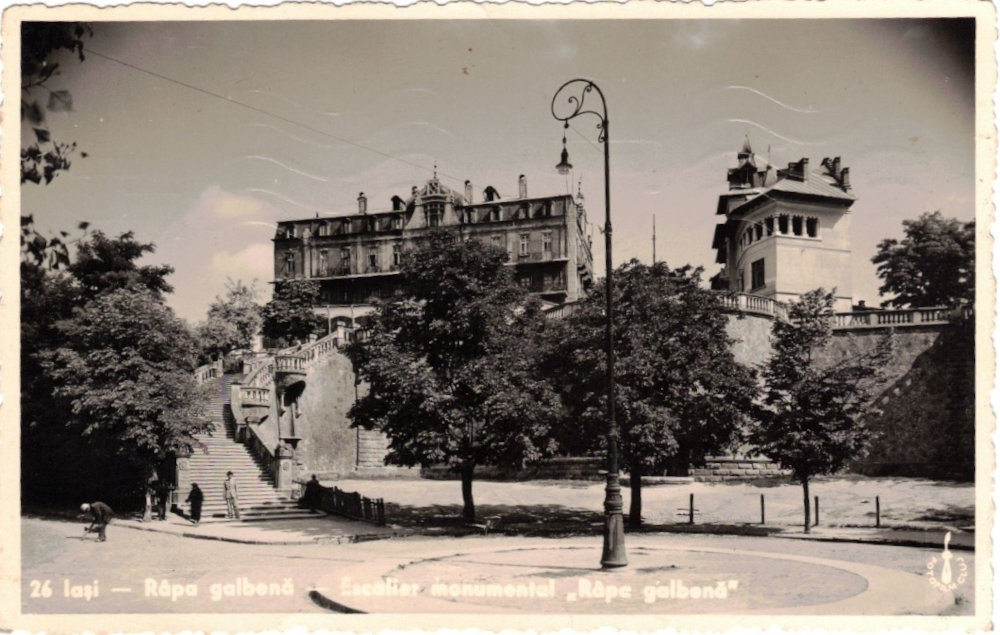
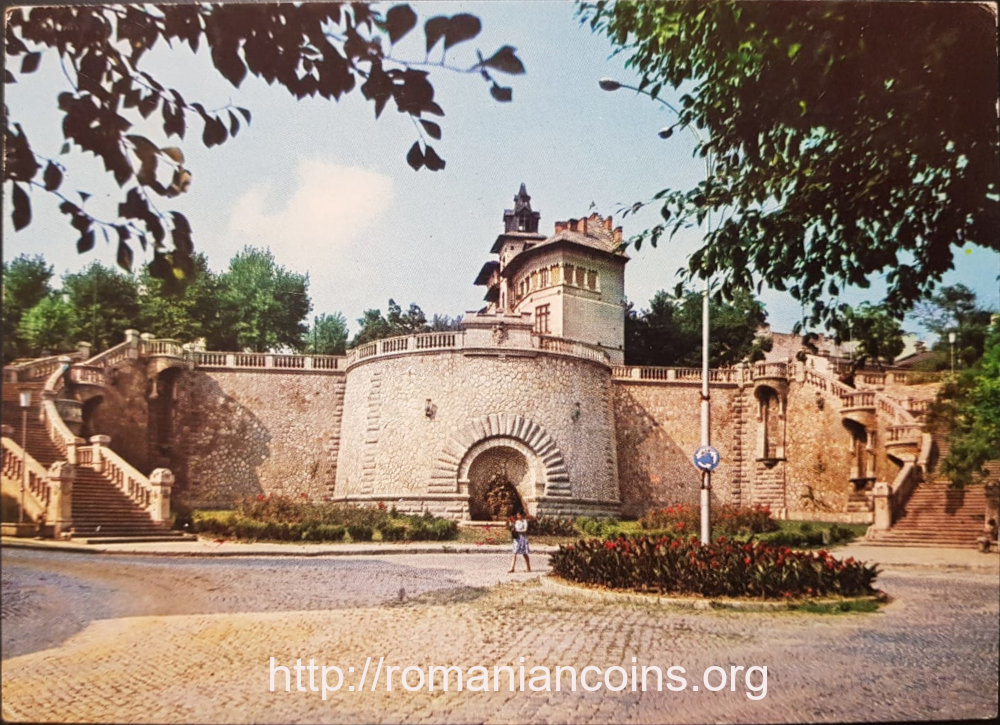
The Bejan Hotel was located above the monumental stairs at Rîpa Galbenă (Yellow Ravine). We could not find out when it was built (in July 2025 the oldest references we found on the Internet were for the Bejan Palace - 1916, the Bejan Cinema - 1918, the Bejan Hall - 1918, the Lux Cinema / Bejan Theatre - 1918, the Bejan Terrace, the Bejan Hotel - 1923). The information in the dedicated Wikipedia article [6] that the hotel was built in 1897 is obviously wrong, because there are postcards with images of the stairs at Rîpa Galbenă from times before the hotel was built. The stairs at Rîpa Galbenă, whose official name seems to have been Esplanada Elisabeta, were finished in 1900 [7]. In the work [8] several plans of the hotel and terrace Eng. Gr. Bejan were published. The great earthquake in Vrancea on November 10, 1940, strongly affected the city of Iaşi. From [9] we learn that the Bejan Hotel suffered great damage. Also, that the great chandelier of the Banu church and the crosses on the steeples of some churches fell. On two of the plans presented in [8] the part that collapsed in the earthquake is also indicated.
The terrace is placed on the Rîpa Galbenă side of the hotel.
Schäffer [10] attributes the tokens “Terasa inginer Bejan” to a Bejan Vasile restaurant located on Socola Street in Iaşi. Very likely the information is wrong. The values of 5, 25, 30, 45, 50 (bani) and 1 leu are known.
References
1. * * * Ministerul Instrucţiunii şi al Cultelor, Anuarul oficial întocmit serviciul statelor personale şi al statisticei la 15 noembrie 1908. Institutul de Arte Grafice Carol GÖBL S-sor Ion St. Rasidescu, Bucureşti, 1908.
2. Ecoul Moldovei”, an V, no. 32, 22nd of February 1896.
3. Ecoul Moldovei”, an VII, no. 71, 24th of March 1898.
4. Ecoul Moldovei”, an VIII, no. 76, 1st of April 1899.
5. Ecoul Moldovei”, an IX, no. 43, 2nd of March 1900.
6. * * *, Hotelul Bejan (in Romanian), Wikipedia, accessed August 2025.
7. * * *, Esplanada Elisabeta din Iaşi (in Romanian), Wikipedia, accessed August 2025.
8. Iftimi S., Văleanu M.C., Piaţa "Mihai Eminescu" din Iaşi. Repere istorice şi cercetare arheologică. Editura Palatul Culturii, Iaşi, 2015.
9. Ionescu C., Văcăreanu R., The 1940 Vrancea Earthquake. Issues, Insights and Lessons Learnt. Proceedings of the Symposium Commemorating 75 Years from November 10, 1940 Vrancea Earthquake, Springer International Publishing, 2016.
10. Schäffer E., România. Jetoane, semne valorice şi mărci, Guttenbrun, 2012.
|
Back to sitemap page!
|